Category: Uncategorized posts

  • The “Hajun case”: what it is, what sentences have been handed down, and how it continues in 2026

    The “Hajun case”: what it is, what sentences have been handed down, and how it continues in 2026

    Belarusian Hajun is a civic monitoring project launched in early 2022 after Russia’s full-scale invasion of Ukraine. Through a Telegram bot and community, it collected photos and information on the movement of Russian military equipment across Belarus. As early as 2022 the authorities of Belarus designated the project an extremist formation; in subsequent years participants and those who passed on data have mainly been charged under Article 361-4 of the Criminal Code—“assistance to extremist activity.”

    Turning point: compromise of the bot in February 2025

    On 5 February 2025 law enforcement gained access to the bot’s infrastructure (publicly described as a hack or compromise). Independent media estimated that data on roughly 30,000 users who had submitted material was exposed. Founder Anton Motolko announced the closure of the project. A mass wave of detentions across the country followed.

    The founder: trial in absentia

    Anton Motolko (journalist, media strategist, in exile since 2020) was sentenced in absentia by the Hrodna Regional Court in June 2025 to 20 years in a penal colony and a large fine (reports cited on the order of €24,000–28,000 / 84,000 BYN). Charges in various summaries included treason, calls to seize power, mass disorder, discreditation [of Belarus], and a number of other articles. The ruling could be appealed.

    Trials and articles

    Those who sent messages to the bot have been prosecuted in large numbers under Part 1 and/or Part 2 of Article 361-4. As Nasha Niva explained, a single submission is charged under Part 1 (up to 4 years of restriction of liberty without imprisonment—“home restriction” [often called “home chemistry” in Belarusian context], or 2–6 years in a colony); several messages trigger Part 2 as well (2–5 years of “chemistry” [restriction with assignment to an institution] or 3–7 years in a colony). The same article is applied to other forms of “assistance” to extremist structures and media, so not everyone convicted under 361-4 belongs in “pure Hayun” statistics without checking the case file.

    According to a Nasha Niva sample of people convicted only under 361-4 with a final sentence after July 2025 (when the “pipeline” began after the breach), of 75 people, 65% received home restriction, 35% received harsher penalties (colony or “chemistry” with placement in a correctional facility).

    Detentions in 2026

    The human rights centre Viasna publicly raised its minimum estimates of the number of people in custody specifically in the Hayun line:

    • 19 January 2026 — at least 163 people detained and remanded.
    • Early February 2026 — an update cited at least 175 detainees.
    • A later figure — at least 183 people held in custody.

    Viasna and Mediazona stressed that people keep becoming suspects across the country and that proceedings are not winding down.

    In a January roundup Mediazona noted directly: home restriction is imposed most often, but colony sentences and “chemistry” with placement in an open-type correctional institution (ИУОТ) also occur—formally not “prison,” but with substantial restrictions.

    Mediazona Belarus published a major piece on the anniversary of the leak (5 February 2026) on the consequences for project participants—a useful milestone for a “one year on” framing.

    Bottom line

    The “Hayun case” in 2026 is not a past spike but an ongoing conveyor: human rights defenders have steadily raised the bar for confirmed numbers in custody from 163 to 183+ in the first months of the year while new detentions are still recorded. Hearings run almost daily; Article 361-4 dominates. A separate layer is the listing of hundreds of convicts in the Interior Ministry’s extremist register, which extends the consequences after sentencing.
  • Rita Dakota on why her mother was targeted in Belarus

    Rita Dakota on why her mother was targeted in Belarus

    Singer Rita Dakota (Margarita Gerasimovich), who was born in Belarus and built her career in Russia, spoke publicly for the first time about why her mother, Svetlana Gerasimovich, was detained in 2022. She did so on Instagram. Details have been recounted by, among others, Salidarnasc / GazetaBY and Nasha Niva.

    Independent outlet Nasha Niva reported that news of the detention surfaced in a pro-government Telegram channel in the typical format used for such posts. The text referred to the threat of a criminal case over participation in protests.

    What Dakota says now

    According to the singer, her mother—a former primary-school teacher—was “the fairest and most empathetic” person.

    “Being the fairest, most empathetic, and most compassionate person on this earth, my mother couldn’t walk past a crowd of security officers kicking a young man lying on the ground in the head with their kirza boots in Minsk in broad daylight. My mother shouted that this was wrong and tried to appeal to their humanity. Of course, no one listened to a pensioner; they brushed her off rudely.”

    Rita says her mother came home deeply shaken by what she had seen—and wrote some emotional comment on social media. “For that she was charged with ‘public insult of a representative of authority in connection with the performance of official duties’ and ‘cyberbullying.’” Her mother could have been jailed, but “miraculously managed to leave” the country.

    After Svetlana Gerasimovich’s detention, her daughter says, serious health problems began: she underwent major surgery and became a wheelchair user.

    Why this is only coming out now

    Rita Dakota deliberately stayed silent for several years: she feared publicity would worsen her mother’s situation. That is a typical pattern for families under political pressure—going public is seen as added risk.

    Further context: after the 2020 protests in Belarus and the track “Ukhoди” (“Leave”), the singer herself ended up on a blacklist in her home country. After the full-scale war began, she spoke out in support of Ukraine. Nasha Niva has described restrictions on her touring in Russia and forced emigration (including living in the United States). The story with her mother fits into the wider pattern of pressure on relatives and associates.

    Bottom line

    Svetlana Gerasimovich’s case illustrates how in Belarus a response to street violence and an online post can lead to criminal exposure and a severe toll on health, while the family avoids discussing it publicly for years for safety reasons.

  • Belarus: political prisoners as of 7 April 2026 — the number, the trend, high-profile cases

    Belarus: political prisoners as of 7 April 2026 — the number, the trend, high-profile cases

    Belarus: political prisoners as of 7 April 2026 — the number, the trend, high-profile cases

    The human rights centre Viasna and partners maintain the count of political prisoners in an open database; updates appear on spring96.org and on Telegram @viasna96.

    How many people, and how the figure has moved

    After the mass pardon on 19 March 2026, when about 250 people from those persecuted for political motives left detention, Viasna recorded 897 political prisoners — for the first time in more than four years below the 900 mark. Rights defenders warned at the same time: trials and detentions had not stopped; unless repression halts, the list will climb again.

    On 26 March Viasna recognised 12 more people as political prisoners. According to Nasha Niva, that brought the public list to 910 in total (see spring96.org for detail).

    7 April 2026: 17 more people

    On 7 April 2026 Belarusian human rights groups issued a joint statement (Viasna, Belarusian Helsinki Committee, Lawtrend, Belarusian Association of Journalists, Legal Initiative). It recognised 17 more people as political prisoners (names as in Viasna’s and outlets’ lists — e.g. Palaznik, the Kavalenka family members, Pustakhod, Yankovich, and others; see REFORM.news / Nasha Niva for the full list).

    According to the signatories, these people were detained or convicted in connection with contact with “extremist formations” and exercising freedom of expression.

    As of 7 April 2026, 922 people were recognised as political prisoners in Belarus (figure from Viasna’s summary that day; recheck the current line on spring96.org when you publish).

    Over roughly the past month — cases that made the news

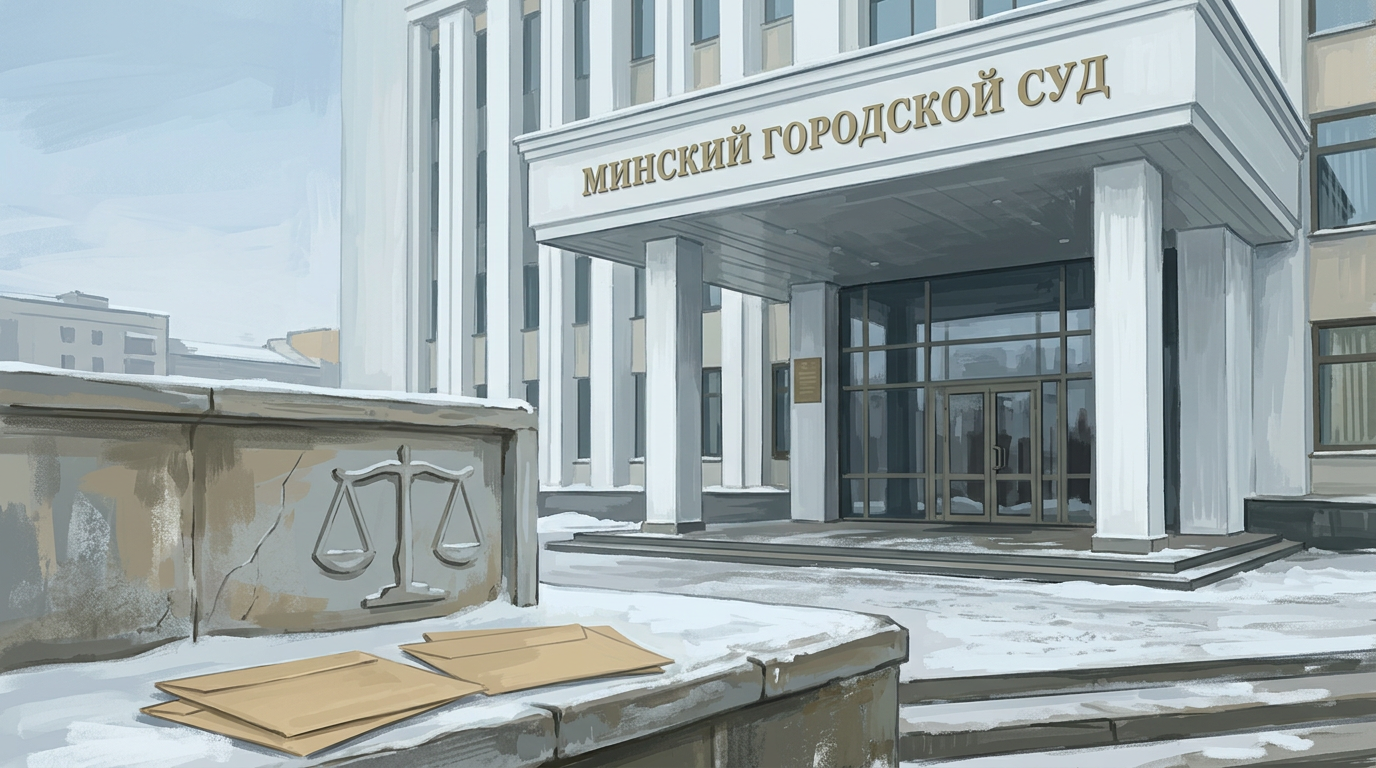
    • On 4 March Minsk City Court sentenced musician, researcher and radio host Aleh Khomenka to 3 years for cooperation with Radio Racyja (Nasha Niva).
    • On 19 March Minsk City Court sentenced eight women to up to 10 years in a penal colony in the “courtyard chats” case (Radio Svoboda).
    • Holy Week and Easter in detention were spent by parish priest Anatol Parakhnevich in Alkovichi, Vileyka district (Nasha Niva).
    • Hleb Rybchenko, a 31-year-old IT specialist linked in reports to Wargaming / Lesta, faced heavy charges; open sources after review cite 14 years in a maximum-security colony (confirm against the final judgment).
    • The arrest of civic activist and father of many children Viktar Yavumenka was reported by Nasha Niva (see also his inclusion in the 17 names of 7 April).
    • Lithuanian citizen Miroslavas Trotskis was sentenced to 15 years in a maximum-security colony on espionage and related charges (DissidentBY and follow-up reports).

    Bottom line

    Against the large March release, the 897 figure briefly dipped below 900, but new recognitions and trials quickly pushed the count back up: 910, then 922 by 7 April. This is not steady “normalisation” but a revolving door: some leave detention, others are taken in. The month’s high-profile threads — Radio Racyja, courtyard chats, a priest at Easter, an IT case, and a foreign national on espionage charges — set the pace of public attention.

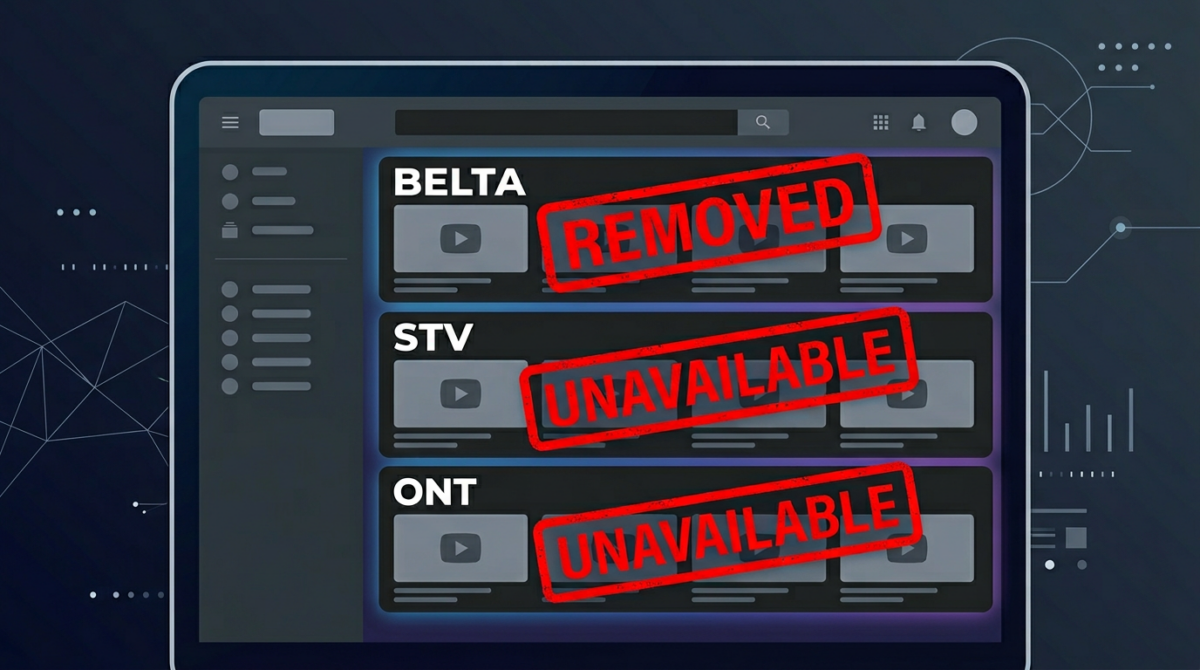
  • YouTube removed the channels of BelTA, STV and ONT: what we know

    YouTube removed the channels of BelTA, STV and ONT: what we know

    The YouTube video platform (owned by Google) removed the official channels of three major Belarusian state media outlets: the BelTA agency and TV channels STV and ONT. News of the block spread widely on the evening of 3 April 2026. Users see the platform’s standard notices that the account is restricted; Belarusian outlets themselves, as well as independent observers, note that the corporation has not issued a public explanation with a detailed rationale.

    The Belarusian side’s position

    According to BelTA, the move is linked to sanctions-related restrictions. At the same time, the agency stresses that BelTA itself is not under sanctions. The Information Ministry called the step unfriendly and unjustified and said it reserved the right to respond. Later the Foreign Ministry, the head of the CIS Executive Committee, and other official bodies commented. BelTA’s news feed also carried reactions from foreign media associations.

    Scale

    This is not only about stopping new uploads but about the disappearance of multi-year archives on the platform. According to figures cited in overview pieces (including references to STV metrics), the TV company’s channel had more than 2.4 million subscribers, and the combined reach of selected projects in 2025 was estimated at over 1.7 billion views.

    Independent commentators tie the removals to Western sanctions on state media structures and related legal entities (public discussion includes the role of Belarusian State Television and Radio Company and similar entities under EU and US sanctions regimes). Without a separate corporate statement, the exact legal chain by which Google’s moderation removed these specific accounts remains a matter of interpretation.

    The episode deepens polarisation in the media space: Belarusian state content loses a lawful presence on the world’s largest video service, the authorities promise a response, and viewers are urged to be careful with duplicate channels and to move to other platforms.

  • Release of political prisoners in Belarus: context and scale

    Release of political prisoners in Belarus: context and scale

    Minsk. In 2025–2026, open sources repeatedly reported mass pardons of people whom human rights groups classify as political prisoners. These events unfolded against the backdrop of Belarusian leadership’s foreign-policy contacts with the United States and a partial reassessment of Western sanctions, including in trade and transport.

    Timeline (from media and monitoring reports)

    In autumn 2025, a large group of prisoners was released under arrangements with Washington as described in the press. Some of those freed were taken to the state border to leave the country.

    In December 2025, the authorities announced the pardon of another group — lists included, among others, figures from high-profile cases after the 2020 presidential election.

    In spring 2026, media reported a new wave of pardons numbering on the order of several hundred people. Reports said some of those released remained in the country, while others left.

    Legal and human rights assessment

    A pardon does not quash the conviction and does not declare it unlawful. International and Belarusian independent rights defenders stress that repression of dissent continues: according to the Viasna Human Rights Centre, on certain dates in 2026 the political prisoner list still stood at roughly 1.1–1.2 thousand people. The organisation notes that the list is not exhaustive. Human Rights Watch and others link mass detentions and sentences after 2020 to restrictions on freedom of expression, assembly and association.

    Bottom line

    Mass exits from detention lower the headcount on political-prisoner lists, yet monitoring groups assess the scale of politically motivated criminal prosecution as still large. The foreign-policy context of the releases does not remove questions about conditions of detention, access to justice, and the fate of those still serving sentences.

  • Belarus in Freedom House 2026: “Not Free” status and zero scores for the opposition

    Belarus in Freedom House 2026: “Not Free” status and zero scores for the opposition

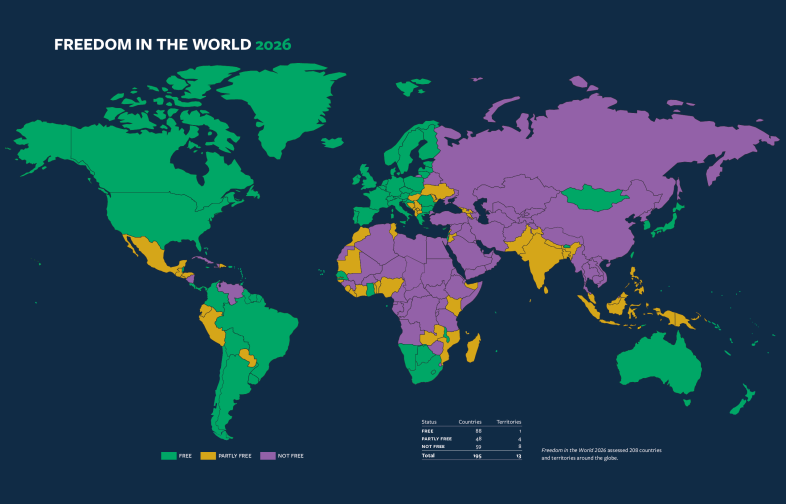
    Freedom House has published the latest Freedom in the World edition for 2026 (covering calendar 2025). In the country chapter, Belarus is again classed as Not Free: an overall score of 7 out of 100, political rights 1 out of 40, civil liberties 6 out of 60. Compared with the previous year, the aggregate rating is unchanged (7/100; Not Free status retained).

    Assessment of the political system

    The country overview states that Belarus is an authoritarian state where elections are openly rigged, civil liberties are tightly restricted, and security forces use violence and arbitrarily detain journalists, activists, and citizens who criticise the authorities. The judiciary and other institutions, in the authors’ wording, lack independence and do not constrain President Alyaksandr Lukashenka’s powers.

    The opposition (the report’s methodology)

    In the table for political pluralism and participation, Belarus receives zero on several indicators, including whether the opposition has a realistic chance to build support or take power through elections. Together with zero scores on party freedom, freedom of political choice, and other items, Freedom House’s own framing means no competitive politics within the official system. In editorial terms, that matches a situation where organised legal opposition inside the country is effectively ruled out of permissible political activity — not as a separate quotation but as an inference from the report’s zero scores and its description of repression.

    Key events of 2025

    The report notes the presidential campaign in January 2025 and the result announced by the state for the incumbent (about 87% of the vote); the campaign, it stresses, took place amid severe political repression and continuing harsh persecution of any dissent.

    It mentions two episodes of releases of political prisoners following high-level contacts between US officials and President Lukashenka. Names cited include, among others, Siarhei Tsikhanouski, Maryia Kalesnikava, Viktar Babaryka, and human rights defender and Nobel Peace Prize laureate Ales Bialiatski. The text emphasises that many of those freed were taken out to Lithuania and Ukraine, often without identity documents. At year’s end, according to the Viasna Human Rights Centre, the country still held more than 1,100 political prisoners.

    The report also records the expansion of “anti-extremist” practice: courts designated more than 2,000 items of information “extremist” (messenger channels, books, social media accounts); the “extremist formations” list includes more than 300 entities, including education initiatives, NGOs, independent media, creative and other groups.

    Belarus in the global picture

    In Freedom in the World 2026, Freedom House stresses a 20th consecutive year of worsening aggregate freedom worldwide. Belarus’s 7 out of 100 places it among states with very low political rights and civil liberties.

  • Freedom Day 2026

    Freedom Day 2026

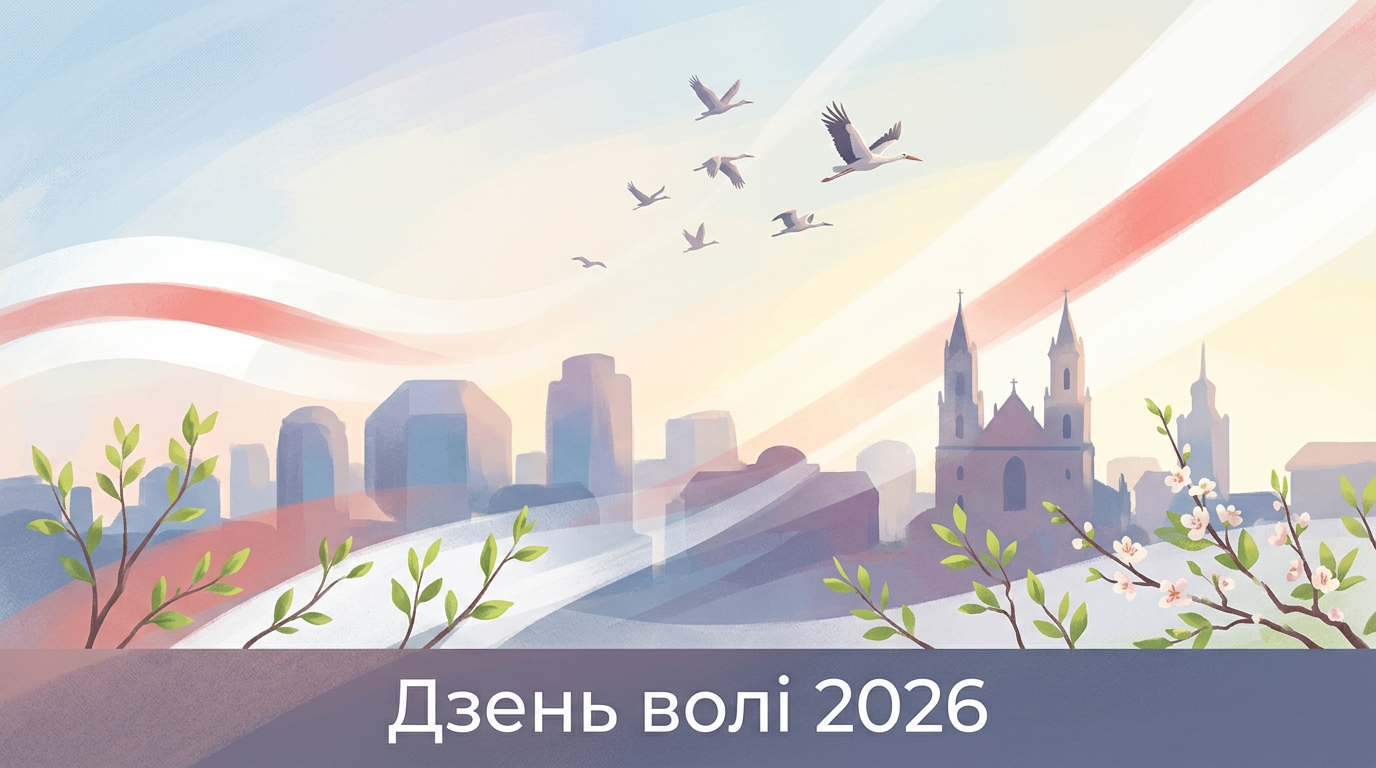
    On 25 March 2026, the 108th anniversary of the proclamation of the Belarusian People’s Republic (BPR) is marked — Freedom Day (Dzień Voli). On this day Belarusians around the world hold solidarity actions, cultural events, and rallies organised by the diaspora, including under the umbrella of Sviatlana Tsikhanouskaya’s office.

    Main points for Freedom Day 2026:

    • Symbolism: Freedom Day (Dzień Voli) is an unofficial independence day for the statehood proclaimed in 1918.
    • Events: Solidarity actions are planned in many cities worldwide, including Białystok and Chicago.
    • Appeals: Leaders of the democratic forces, including Sviatlana Tsikhanouskaya, issue calls for Belarusians to unite.
    • Atmosphere: Events take place under white-red-white flags, underscoring national identity and the aspiration for democracy.

    In 2026, the day stands as a symbol of the continuing struggle for independence and democratic change.

  • “BYSOL couriers”: Minsk City Court sentences four Minsk residents

    “BYSOL couriers”: Minsk City Court sentences four Minsk residents

    On 17 February 2026, Minsk City Court handed down sentences against four residents of the capital whom the investigation treated as participants in an “extremist formation” — the BYSOL solidarity fund. According to the prosecution’s account, they acted as couriers, receiving and passing on money to other participants in the scheme. BYSOL representatives reject that model. The court imposed on the defendants between two and three years’ imprisonment, substantial fines, and confiscation; according to legal summaries, the judgment entered into force.

    Charges

    All four were tried under Article 361(3) of the Criminal Code of Belarus (participation in an extremist formation). One woman was additionally charged under Article 342(1) — participation in actions that grossly disturb public order. Independent media covered the proceedings and the legal classification; the Viasna Human Rights Centre also referenced the case on its channels.

    The prosecution’s version

    The investigation, as quoted by outlets, described joining the scheme no later than June 2024 and operating for about five months: collecting and transferring funds and distributing them in the interests of participants in “protest” and “extremist” activity. Coordination allegedly took place via correspondence with people abroad, using coded wording and minimising face-to-face contact. Over the period in question, case materials cited sums on the order of €2,000 and US$1,100 (as movement of funds within the alleged scheme). According to mlyn.by, two defendants admitted guilt and expressed remorse; two denied guilt.

    Sentences and property penalties

    • Two defendants were sentenced to 2 years’ imprisonment;
    • two — to 3 years (including the woman with the additional charge);
    • each was fined 500 base units (media conversions cite roughly 22,500 Belarusian roubles);
    • confiscation of mobile phones and money was ordered; some reports add recovery of more than 10,000 roubles as proceeds of crime.

    BYSOL’s position

    In comments to Euroradio, the fund said it does not use couriers to move money inside Belarus and treated the charges as part of pressure on solidarity initiatives. Readers should distinguish criminal qualification under Belarusian law from judgment of the organisation itself: under Belarusian rules BYSOL is classified as an extremist structure, which in itself affects the legal status of any “assistance” involving it on the territory of the country.

  • As of 31 January 2026: again more than a thousand behind bars

    As of 31 January 2026: again more than a thousand behind bars

    By the end of January 2026, human rights monitors estimated that 1,158 political prisoners were held in places of detention in Belarus. Among them were 172 women. Over the previous month, the monitoring community added 51 more people to that category. At the same time, Viasna recorded 50 people as former political prisoners — i.e. it recognised their prosecution as politically motivated in connection with exercising rights to peaceful assembly, association, and freedom of expression (including in the context of elections and public life after 2020).

    What these three different numbers mean

    The three figures answer different questions and must not be conflated.

    1,158 is a snapshot on a date: how many people, as of 31 January 2026, rights defenders count as currently in pre-trial facilities, penal colonies, etc., on grounds they classify as political. For newsrooms, the source for such a cut-off is the updated data on spring96.org and tools such as the political prisoners table. Independent media sometimes carry the same figure in briefs (for example, Nasha Niva has cited 1,158).

    51 in a month is inflow of “new” names on the list for January: new sentences, new figures in high-profile cases, or status changes when information appears. It is not the same as “exactly that many people were jailed in the country in a month”: some cases surface with a delay, some remain behind closed hearings.

    50 former is a separate bookkeeping category: people whom rights defenders reclassified as former political prisoners by formally recording a finding of politically motivated prosecution. REFORM.news summarises the names and links to Viasna’s publication.

    Important editorial note: in everyday speech, “rehabilitation” is often mixed up with legal rehabilitation under criminal law and removal of a conviction. Recognition as a former political prisoner is above all a human rights and moral-political designation, not an automatic court ruling on rehabilitation. If you write that activists “demanded rehabilitation”, specify what was meant — quashing a conviction, compensation, political acknowledgment — so readers do not assume the authorities had already issued a formal rehabilitation order.

    Context after the December pardons

    Readers may get the impression that after the mass releases at the end of 2025 “the problem is solved.” The 1,158 snapshot shows the opposite: the machinery of political cases keeps refilling the lists. In parallel, large-scale operations and trials continue in the public domain (in January 2026, media agendas still featured the case tied to the Belaruski Hajun monitoring project and mass detentions). That is not “proof” behind each of the 51 new entries, but it helps explain why the count at the prison gate does not fall in a straight line.

    What the desk should do before publication

    • Cross-check 1,158, 172, 51, and the wording on the 50 against the current news line on spring96.org — figures can shift slightly within days of the cut-off.
    • In the lead or a footnote, briefly explain: “political prisoner” is a human rights methodology term, not the charge wording in a verdict.
    • For art, label “collage / AI / symbolic” if it is not documentary photography.

    Editorial disclaimer. If any figure in your draft differs from the latest line on spring96.org on the day you publish — the rights defenders’ primary source takes prio

  • “Year of the Belarusian Woman” — 2026: Decree No. 1 and the question of political prisoners

    “Year of the Belarusian Woman” — 2026: Decree No. 1 and the question of political prisoners

    President of Belarus Alyaksandr Lukashenka signed Decree No. 1 of 1 January 2026, declaring the current year the Year of the Belarusian Woman. In the official framing, the document aims to shape a “national image of the woman as a worker” and to promote women’s role in preserving and developing society. A broad campaign runs in parallel: family, health, media, and public events. The response from the opposition and human rights defenders is predictable: against the backdrop of hundreds of political prisoners in the country and dozens of women behind bars, such declarations are described as a gap between words and practice.

    The critical line

    In outlets such as BBC Russian, public pushback rests on names and numbers: reminders of women political prisoners, heavy sentences, and conditions in pre-trial facilities and colonies. The argument is not that “women should not be celebrated,” but that criminal prosecution for dissent and civic stance — including against women — undermines trust in official “care.” For the current prisoner count and gender breakdown, newsrooms should check spring96.org and specialised projects (belaruswomen.org, etc.) as of the publication date.